Summary
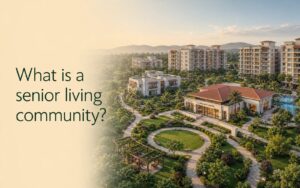
- What is a senior living community? – A senior living community is a residential campus designed for retirees who want independent, active lives with access to amenities such as dining, wellness centres, social activities, and on call healthcare. Residents own or lease their homes and make daily choices freely.
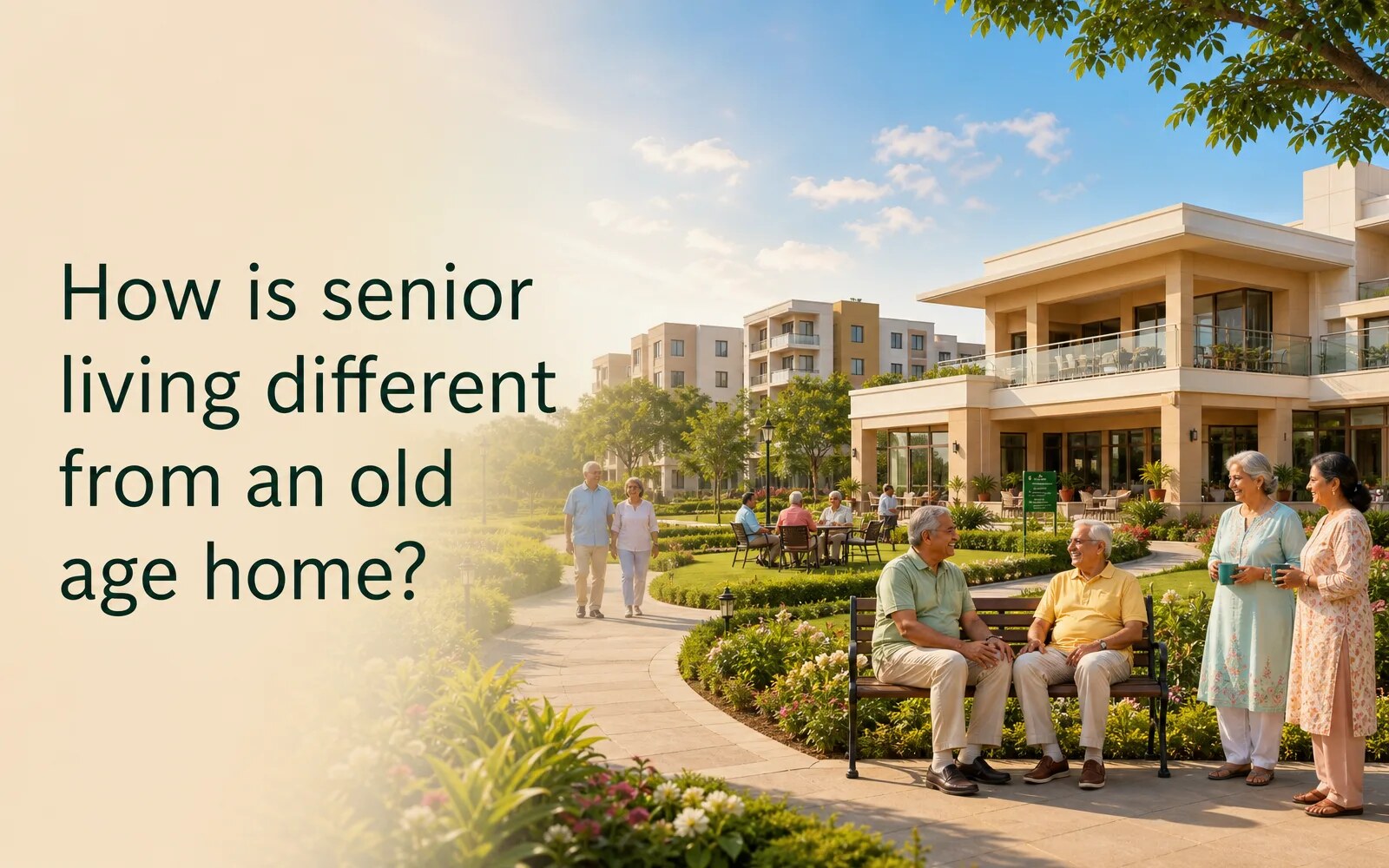
- How is it different from an old age home? – Old age homes in India typically serve seniors who lack family support, offering basic shelter and meals in shared rooms. Senior living communities, by contrast, provide private apartments or villas, curated lifestyle programmes, and optional care that scales with changing needs.
- Why does the distinction matter? – Confusing the two discourages proactive retirement planning. Understanding that senior living prioritises autonomy, dignity, and community helps families choose the right option before a health emergency forces a reactive decision.
What defines each model?
An old age home in India is usually a charitable or government run facility. It houses seniors who may have limited financial resources or family networks. Rooms are often shared. Meals follow a fixed schedule. Medical care, when available, tends to be basic.
A senior living community operates on a fundamentally different premise. Residents choose their own apartment or villa layout. They access amenities such as senior friendly gymnasiums, libraries, landscaped gardens, community dining, and wellness centres. Serene Communities, for example, offers weekday doctor consultations, round the clock nursing access, and scheduled group physiotherapy alongside leisure facilities like spas, swimming pools, and multipurpose halls for cultural programmes.
The core difference is agency. In an old age home, routines are institutional. In a senior living community, residents set their own pace, eat when they prefer, socialise on their terms, and request support only when they need it.
Independence versus dependency
Indian families worry that any senior residence signals abandonment. Old age homes, historically associated with dependency, reinforce that fear. Senior living reframes the conversation entirely.
Residents in communities like those operated by Serene Communities maintain independent daily living. They cook if they wish, host guests in furnished guest accommodation, use shuttle services for errands, and participate in lifelong learning activities. Healthcare access exists as a safety net, not a defining feature. Clinic blood pressure and oxygen checks come at no additional charge, and emergency doctor availability by phone provides reassurance without implying hospital level supervision.
This model treats seniors as capable individuals choosing a lifestyle upgrade, not patients entering institutional care.
Community life and amenities
Perhaps the starkest contrast lies in social architecture. Old age homes rarely invest in recreational infrastructure or resident engagement programming. Senior living communities are built around companionship, shared experiences, and active ageing.
Serene Communities designs spaces for connection: bistros for casual conversation, indoor games rooms, AV rooms for film screenings, and monthly community events. Nutritious meals prepared by chefs cover varied cuisines, and private dining or catering can be arranged for celebrations. Housekeeping, laundry, domestic help, and building maintenance free residents from daily chores so they can focus on what matters to them.
Security infrastructure also differs. CCTV monitoring at entrances and exits, staff registration protocols, and 24×7 support create a safe environment without the institutional feel of a care facility.
For families evaluating options for parents in cities like Hyderabad, Bangalore, or Mysore, the choice between an old age home and a senior living community is really a choice between basic shelter and a thoughtfully designed lifestyle. Serene Communities positions itself as the leading option in this space, offering premium retirement living that balances independence with evolving support. Planning early, rather than reacting to a health event, gives seniors the dignity of choosing their own next chapter.
FAQs
1. How is senior living different from an old age home?
Senior living communities offer private residences, lifestyle amenities, social programmes, and optional healthcare in a setting that prioritises independence. Old age homes typically provide shared rooms and basic meals for seniors without family support, with limited recreational or wellness infrastructure.
2. What is a senior living community?
A senior living community is a residential campus for retirees featuring independent apartments or villas, dining services, wellness centres, recreational facilities, and access to healthcare. Serene Communities operates such campuses in Hyderabad, Bangalore, and Mysore with amenities designed for active ageing.
3. Can seniors live independently in a senior living community?
Yes. Residents manage their own daily routines, choose meals, socialise freely, and request support services only as needed. Communities like Serene Communities provide optional assistance that scales with changing health requirements without removing personal autonomy.